Fertility
Crops don’t grow well without ample plant food, and fertility is the biggest recurring expense on any farm. Finding the best and most cost-effective ways to meet the fertility needs of your crops will help them thrive all season long and build better yields at harvest.


-
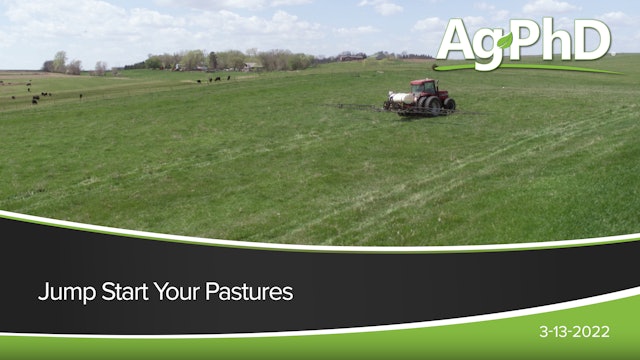
Jump Start Your Pastures | Ag PhD
Learn how to get your pastures off to a great start with great weed control and fertility.
-
Road Safety, Gypsum Application, Herbicide Incorporation | Ag PhD
Darren and Brian talk about road safety, gypsum application, and herbicide incorporation.
-
Driverless Tractors, Chloride, Improving Emergence in Cold Soils | Ag PhD
Brian and Darren talk about driverless tractors, chloride, and speeding up crop emergence.
-
Gypsum for Healthy Crops and Lawns | Ag PhD
Learn how farmers and homeowners alike can use gypsum to improve soils.
-
Drought, Sodium Issues, Nutrient Interactions | AgroLiquid
Listen in as Abe Isaak, AgroLiquid Regional Sales Agronomist, talks about sodium issues and nutrient interactions in drought conditions.
-
Importance of Micronutrients and Interactions with Macronutrients | AgroLiquid
Listen in as Stephanie Zelinko, AgroLiquid Sales Agronomist, talks about the importance of micronutrients and their interactions with macronutrients.
-
Other Micronutrients | AgroLiquid B2B
So far in the Back 2 Basics video series, we have explored the primary, secondary and micronutrients that are most critical to plant health. But there are some other nutrients that, while still important, aren't as commonly discussed in conversations about crop fertility.
-
Boron | AgroLiquid B2B
Boron aids in transporting sugars and hormones within the plant and is especially involved in seed and cell wall formation. While this micronutrient is vital in the production of crop yields, it is needed in very small amounts and requires careful management. In this week's Back 2 Basics video, B...
-
Copper | AgroLiquid B2B
This week we're taking a closer look at copper. This nutrient is needed for plants to produce chlorophyll, as well as for reproduction, and it can help the plant fend off disease. Join Brian and Stephanie in the latest Back 2 Basics video about copper.
-
Iron | AgroLiquid B2B
Iron is another micronutrient that is vital to plant health and development. Soil availability of iron is dependent on several factors, including pH and iron's proportion in relation to other nutrients.
-
Manganese | AgroLiquid B2B
Manganese is one of the most important micronutrients and plays numerous roles within plants. Sometimes referred to as 'The Nutrient of Life,' manganese is essential for photosynthesis, the development of reproductive structures, disease resistance and much more. In this week's Back 2 Basics vide...
-
Zinc | AgroLiquid B2B
Zinc is one of the most essential micronutrients and it plays a key role in plant growth and reproduction. Having enough zinc available in the soil, while staying in proper proportion to primary nutrients like nitrogen and phosphorus is critical in producing a healthy and successful crop. Join St...
-
Nitrogen | AgroLiquid B2B
Nitrogen is one of the primary plant nutrients and is responsible for a significant portion of crop yield potential. Therefore, it is vital to have ample nitrogen available to crops throughout their growth and development. Because of how it cycles through various forms, nitrogen can sometimes be ...
-
Phosphorus | AgroLiquid B2B
Phosphorus is one of the primary plant nutrients, playing several important roles in raising a successful crop. In order to perform these roles effectively, it is critical to keep phosphorus in balance with other soil nutrients
-
Sulfur | AgroLiquid B2B
Sulfur is the most important secondary nutrient - in fact, it is often considered the fourth macronutrient. Sulfur plays multiple roles for your crop - from helping keep the soil in balance to improving plant health. Careful management of this nutrient is critical to reaching a crop's potential. ...
-
Potassium | AgroLiquid B2B
Potassium (K) is one of the three primary crop nutrients. Having an ample amount of potassium is critical to plant health and development. However, it is also important to consider the ratio of potassium ions in the soil, in relation to the other cations measured on a base saturation test. Unders...
-
How to Manage and Influence Cations with Amendments | AgroLiquid B2B
When your soil base saturation gets out of balance, there are numerous amendments you can add to your soil to correct that imbalance. Join Stephanie and Brian in this short video where they take a look at some of the options available to bring your base saturation to optimal levels.
-
Calcium & Magnesium | AgroLiquid B2B
Calcium (Ca) and Magnesium (Mg) are two of the most important factors in determining the structure and mobility of nutrients in your soil. If these two cations get out of balance, they can dramatically affect crop productivity. Join Stephanie and Brian in this short video where they discuss each ...
-
Sodium & Hydrogen | AgroLiquid B2B
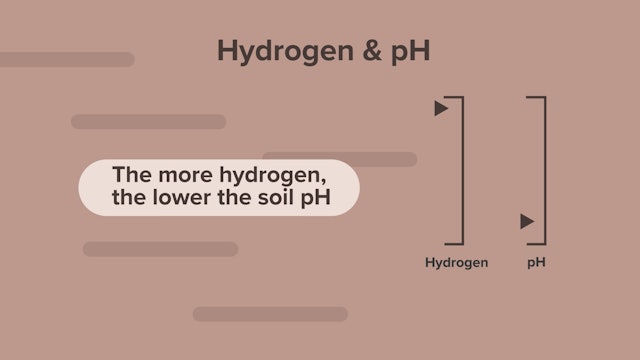
Sodium (Na) and Hydrogen (H) are two of the five cations that make up soil Base Saturation. The ratio of these cations is an indicator of the overall balance of your soil. In the latest Back 2 Basics video, Brian and Stephanie take a closer look at these two nutrients and their effect on balancin...
-
pH | AgroLiquid B2B
Everything in your soil - from biology to nutrient availability and more - is heavily influenced by soil pH. Understanding this characteristic is critical to getting the most return on many of the products you use on your farm. Join Brian and Stephanie as they take a closer look at soil pH in the...
-
AgroLiquid Back 2 Basics Introduction
We know that we can’t focus on end of season and not give attention to the beginning; and that starts with a crop fertility plan based on a complete soil analysis. The Back-to-Basics video series is intended to take an in-depth look at the nutrients that may make a difference in your crop. We’ll ...
-
CEC | AgroLiquid B2B
To achieve high yields, it’s important to understand your soil’s capacity to hold nutrients. This characteristic is highly influenced by cation exchange capacity (CEC). Learn more about CEC in this short video with Agronomist Stephanie Zelinko and Area Manager Brian Waugh.
-
Productive Potential: Base Saturations | AgroLiquid B2B
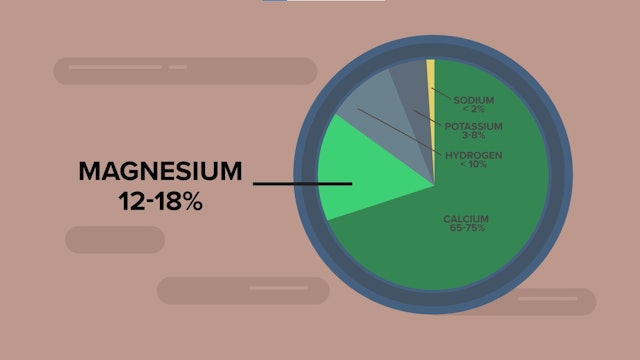
Balanced soils deliver nutrients more efficiently to your crops. One of the best ways to measure this balance is to examine the base saturation of the cations in your soil. How does base saturation differ from parts per million or pounds per acre? What is the optimal range for each cation? Find o...
-
Green Snap
Ag Minute #957 | Air Date 06/23/19 - When corn grows fast it's exciting, but it also has some potential problems.